
 por
por Life insurance is one of the most misunderstood financial products. Some people think it’s only for older adults, others believe it’s a waste of money, and many buy policies without fully understanding what they’re paying for. The truth is that life insurance can be one of the smartest financial decisions—or a completely unnecessary expense—depending on how and when it’s used.
This article explains life insurance in a simple, realistic way: what it is, who really needs it, how to choose the right policy, and how to avoid paying for coverage that doesn’t make sense for your life.
What Life Insurance Is in Plain English
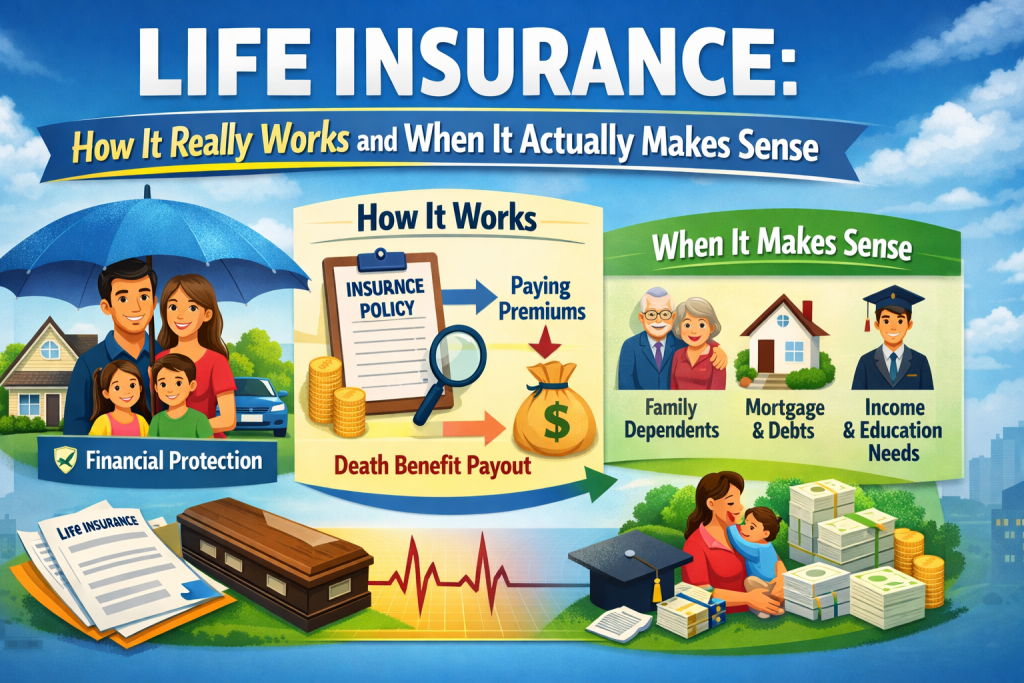
Life insurance is a contract that pays money to your chosen beneficiaries if you die while the policy is active. The purpose is simple: financial protection for the people who depend on you.
That payout can be used to:
- Replace lost income
- Pay off debts
- Cover funeral expenses
- Protect long-term financial stability
Life insurance is not meant to benefit you directly. It exists to protect others from financial hardship.
Who Actually Needs Life Insurance
Not everyone needs life insurance, and that’s where many people get confused.
You probably need life insurance if:
- Someone depends on your income
- You have children
- You have shared debts (mortgage, loans)
- You want to protect a partner or family member
You may not need life insurance if:
- No one depends on your income
- You have no significant debts
- You already have sufficient savings for dependents
Life insurance should solve a real financial problem, not be bought out of fear.
The Two Main Types of Life Insurance
Understanding the difference between the two main types is essential.
Term Life Insurance
Term life insurance covers you for a specific period, such as 10, 20, or 30 years. If you die during that term, the policy pays out. If you don’t, the policy expires.
Why term life insurance is popular:
- Lower cost
- Simple structure
- High coverage for low premiums
For most people, term life insurance is the best option.
Permanent Life Insurance
Permanent life insurance lasts your entire life and often includes a cash value component. This makes it significantly more expensive.
It may be useful for:
- Estate planning
- High-net-worth individuals
- Specific long-term strategies
However, it is often oversold to people who don’t need it.
Why Term Life Insurance Is Usually the Better Choice
For the average person, term life insurance offers the best balance between cost and protection.
Reasons it makes sense:
- You only need coverage during working years
- Premiums are affordable
- It focuses purely on protection
Most people don’t need lifelong coverage—they need income replacement during critical years.
How Much Life Insurance Do You Really Need?
Buying too little or too much life insurance is a common mistake.
A practical way to estimate coverage is to consider:
- Annual income
- Number of years your family would need support
- Outstanding debts
- Education costs for children
A common guideline is 10–15 times annual income, but personal factors matter more than formulas.
What Affects Life Insurance Cost
Life insurance premiums are based on risk. The lower the risk, the lower the cost.
Factors that influence pricing include:
- Age
- Health history
- Smoking status
- Lifestyle habits
- Coverage amount and term length
Buying life insurance earlier often results in much lower premiums.
Common Life Insurance Mistakes People Make
Many people lose money because of avoidable mistakes.
Waiting Too Long
Life insurance gets more expensive with age and health changes. Waiting often means paying significantly more.
Buying Permanent Insurance Without a Reason
Permanent policies are complex and expensive. Many buyers don’t need them but are convinced otherwise.
Not Updating Beneficiaries
Life changes. If beneficiaries aren’t updated, payouts may go to unintended people.
Underestimating Coverage Needs
Choosing the cheapest policy instead of adequate coverage can leave family members unprotected.
Life Insurance vs Savings: Why They Are Not the Same
Some people believe saving money replaces the need for life insurance. In reality, they serve different purposes.
Savings:
- Grow slowly
- Take time to build
- May not be enough early on
Life insurance:
- Provides immediate protection
- Covers large financial gaps
- Is cost-effective early in life
Insurance protects what savings haven’t had time to build yet.
How Life Insurance Fits Into Financial Planning
Life insurance is a risk management tool. It protects the rest of your financial plan from collapse.
With proper life insurance:
- Investments stay untouched during emergencies
- Debt doesn’t transfer to family
- Long-term goals remain achievable
It’s not about profit—it’s about stability.
When Life Insurance Stops Being Necessary
Life insurance is not always a lifelong need.
You may no longer need coverage when:
- Your children are financially independent
- Your debts are paid off
- Your savings can replace your income
At that point, letting term policies expire often makes sense.
How to Shop for Life Insurance Smartly
Buying life insurance doesn’t need to be complicated.
Smart buyers:
- Compare multiple providers
- Focus on coverage, not sales pressure
- Choose term over permanent unless justified
- Read policy exclusions carefully
Life insurance should be boring, clear, and predictable.
Why Life Insurance Has High Financial Value
Life insurance is inexpensive relative to the protection it provides. Few financial tools offer such a high impact for such a low cost.
It transforms uncertainty into security and protects years of financial effort.
Life Insurance Myths That Cause Confusion
Common myths include:
- “I’m too young to need it”
- “It’s only for parents”
- “My employer policy is enough”
Employer coverage is often limited and disappears if you change jobs.
Final Thoughts on Life Insurance
Life insurance isn’t about expecting the worst—it’s about planning responsibly. When used correctly, it protects your family, your goals, and your financial legacy.
The right policy gives peace of mind, not complexity. And for most people, simple term life insurance does exactly that.
Read the next article: